





Product description:
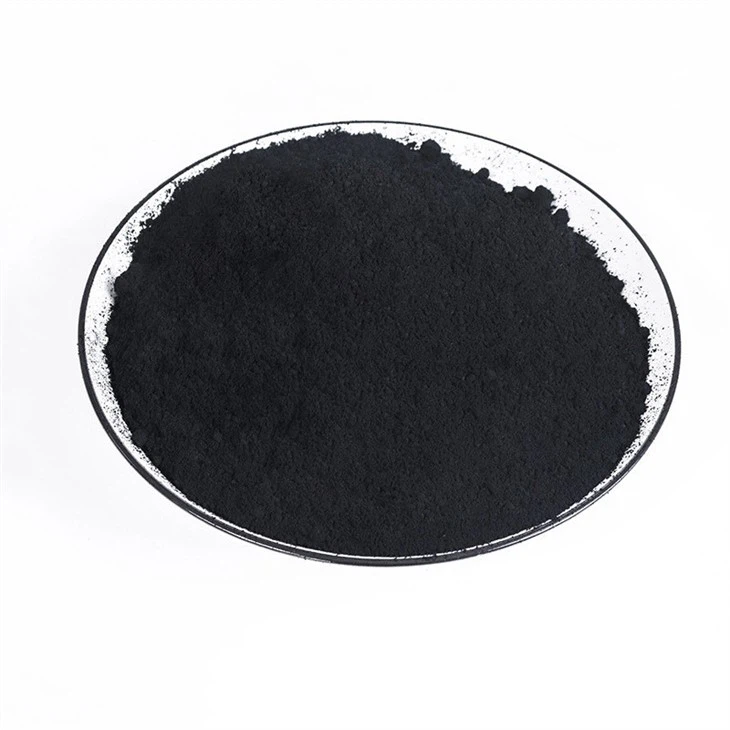
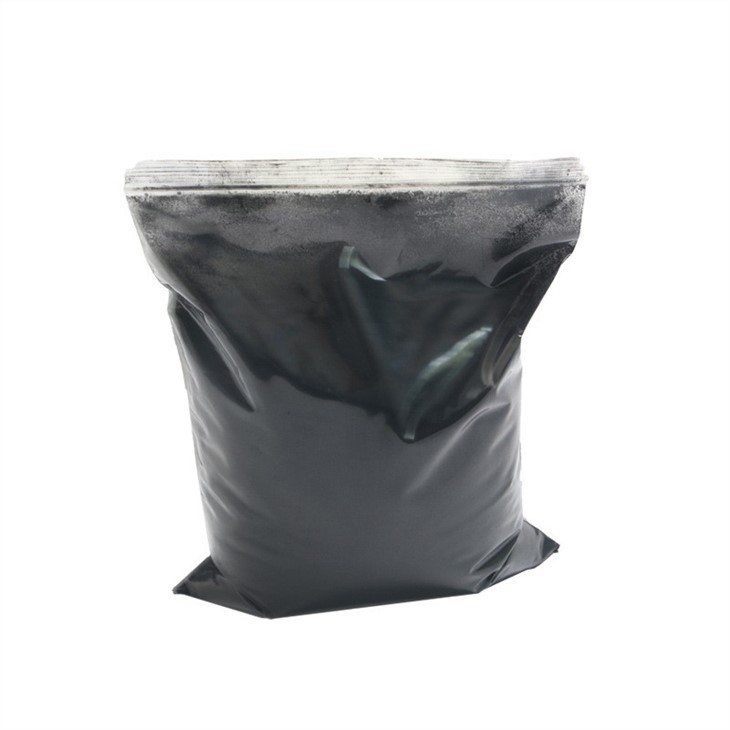
Carbon black (subtypes are acetylene black, channel black, furnace black, lamp black and thermal black) is a material produced by the incomplete combustion of coal and coal tar, vegetable matter, or petroleum products, including fuel oil, fluid catalytic cracking tar, and ethylene cracking in a limited supply of air. Carbon black is a form of paracrystalline carbon that has a high surface-area-to-volume ratio, albeit lower than that of activated carbon. It is dissimilar to soot in its much higher surface-area-to-volume ratio and significantly lower (negligible and non-bioavailable) polycyclic aromatic hydrocarbon (PAH) content. However, carbon black can be used as a model compound for diesel soot to better understand how diesel soot behaves under various reaction conditions as carbon black and diesel soot have some similar properties such as particle sizes, densities, and copolymer adsorption abilities that contribute to them having similar behaviours under various reactions such as oxidation experiments.Carbon black is used as a colorant and reinforcing filler in tires and other rubber products; pigment and wear protection additive in plastics, paints, and ink pigment.It is used in the EU as a food colorant when produced from vegetable matter (E153).
Physical Properties:
|
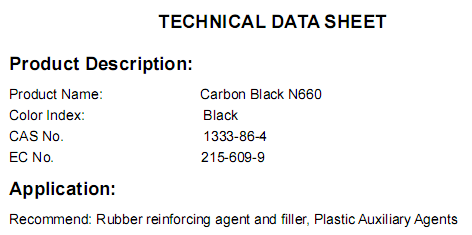
CAS No. |
1333-86-4 |
|
EINECS No.
|
215-609-9 |
|
Appearance
|
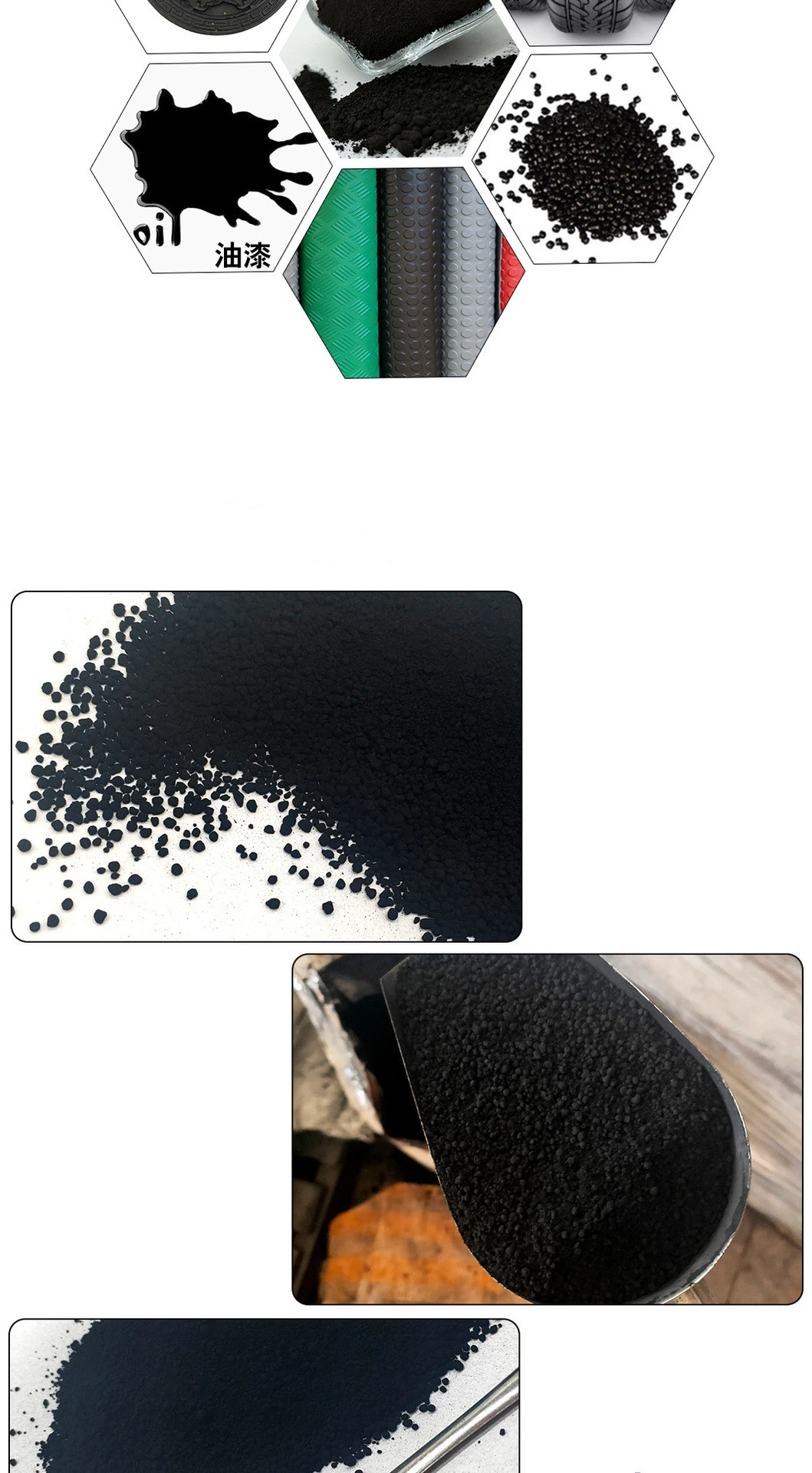
Black powder
|
|
Application
|
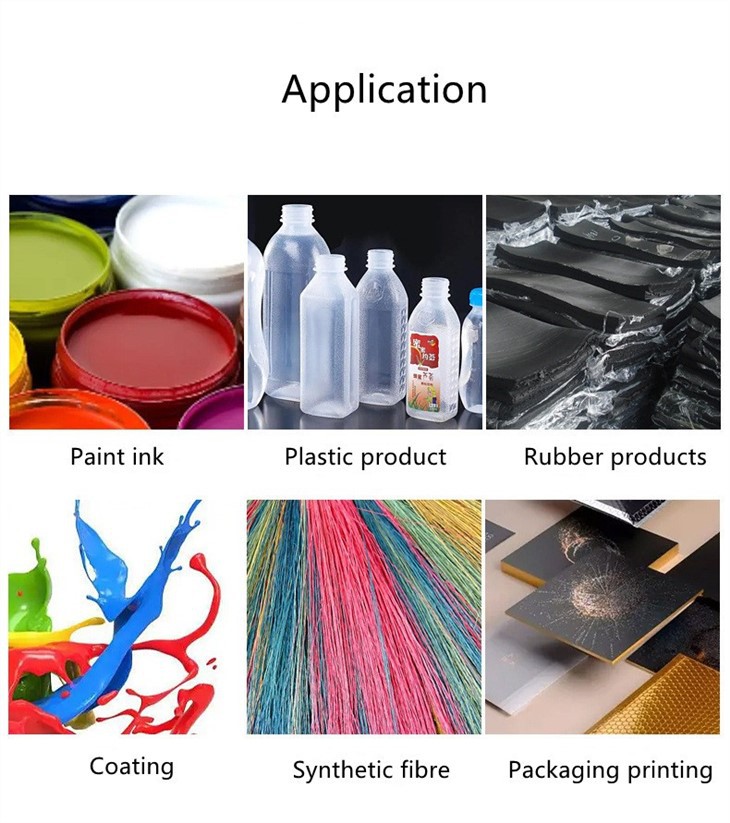
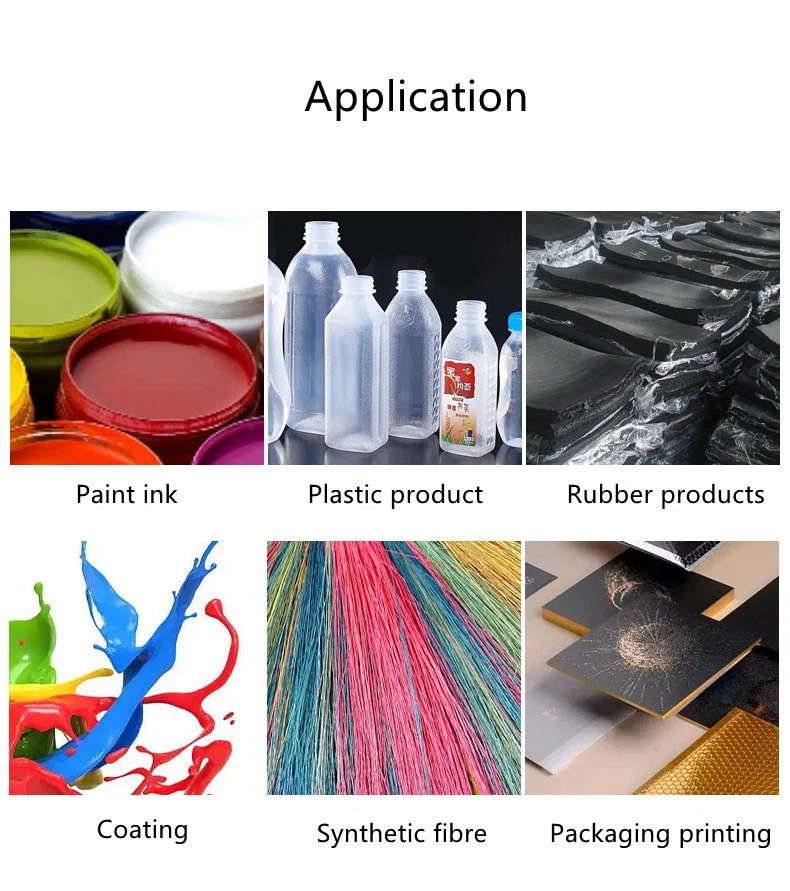
The main uses of carbon black are paint ink, paint color paste, rubber plastic, plastic foam, silicone, ceramic, leather and cement building materials. |
|
Molecular formula
|
C |
|
Molecular Weight
|
12.01 |
|
Melting point
|
3550 °C(lit.) |
|
Boiling point
|
4827℃ |
| Water solubility |
Insoluble |
|
InChI |
InChI=1/C |
| Vapor pressure |
205000mmHg at 25°C |
| Storage condition |
Room Temprature |
| Security terminology |
S26In case of contact with eyes, rinse immediately with plenty of water and seek medical advice |
| Risk terminology |
R36/37Irritating to eyes and respiratory system |
| Volatiles at 105℃ | ≤0.5% |
| PH value | 7.0~9.5 |
|
Oil absorption (g/100g) |
≤23 |
| Whiteness (compared to standard sample) | ≥98% |
| TiO2(W%) | ≥90 |
Certain types of carbon black used in tires, plastics and paints
|
Name |
Abbrev. |
ASTM |
Particle |
Tensile |
Relative |
Relative |
|
Super Abrasion Furnace |
SAF |
N110 |
20–25 |
25.2 |
1.35 |
1.25 |
|
Intermediate SAF |
ISAF |
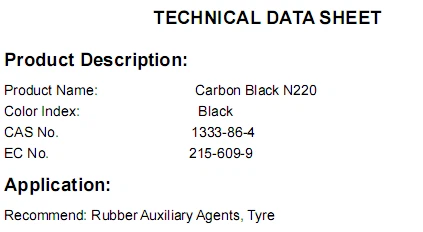
N220 |
24–33 |
23.1 |
1.25 |
1.15 |
|
High Abrasion Furnace |
HAF |
N330 |
28–36 |
22.4 |
1.00 |
1.00 |
|
Easy Processing Channel |
EPC |
N300 |
30–35 |
21.7 |
0.80 |
0.90 |
|
Fast Extruding Furnace |
FEF |
N550 |
39–55 |
18.2 |
0.64 |
0.72 |
|
High Modulus Furnace |
HMF |
N660 |
49–73 |
16.1 |
0.56 |
0.66 |
|
Semi-Reinforcing Furnace |
SRF |
N770 |
70–96 |
14.7 |
0.48 |
0.60 |
|
Fine Thermal |
FT |
N880 |
180–200 |
12.6 |
0.22 |
– |
|
Medium Thermal |
MT |
N990 |
250–350 |
9.8 |
0.18 |
– |
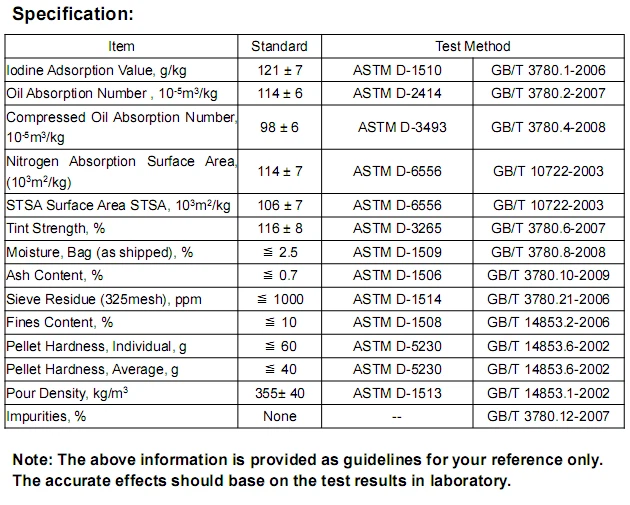
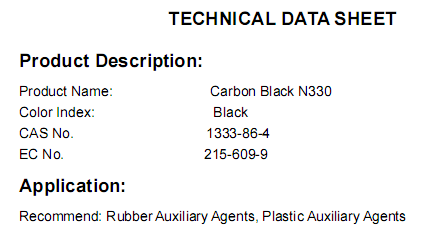
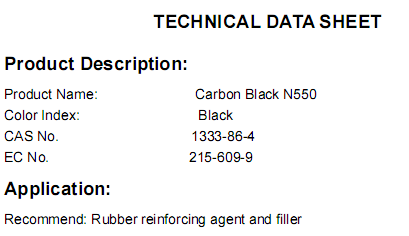
TDS:



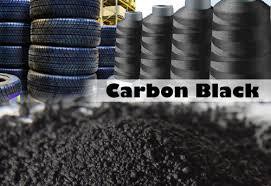
Product picture:


Application:
Shipping method:

Company profile:

Hot Tags: carbon black n220 n330 n550 n660, China, manufacturers, suppliers, factory, cheap, discount, quotation, low price, free sample, Iron Oxide Yellow 77492 For Cosmetics, Carbon Black, Iron Oxide Brown Cosmetic Grade, Titanium Dioxide, Crystal Lotus Candlestick, Pigment


